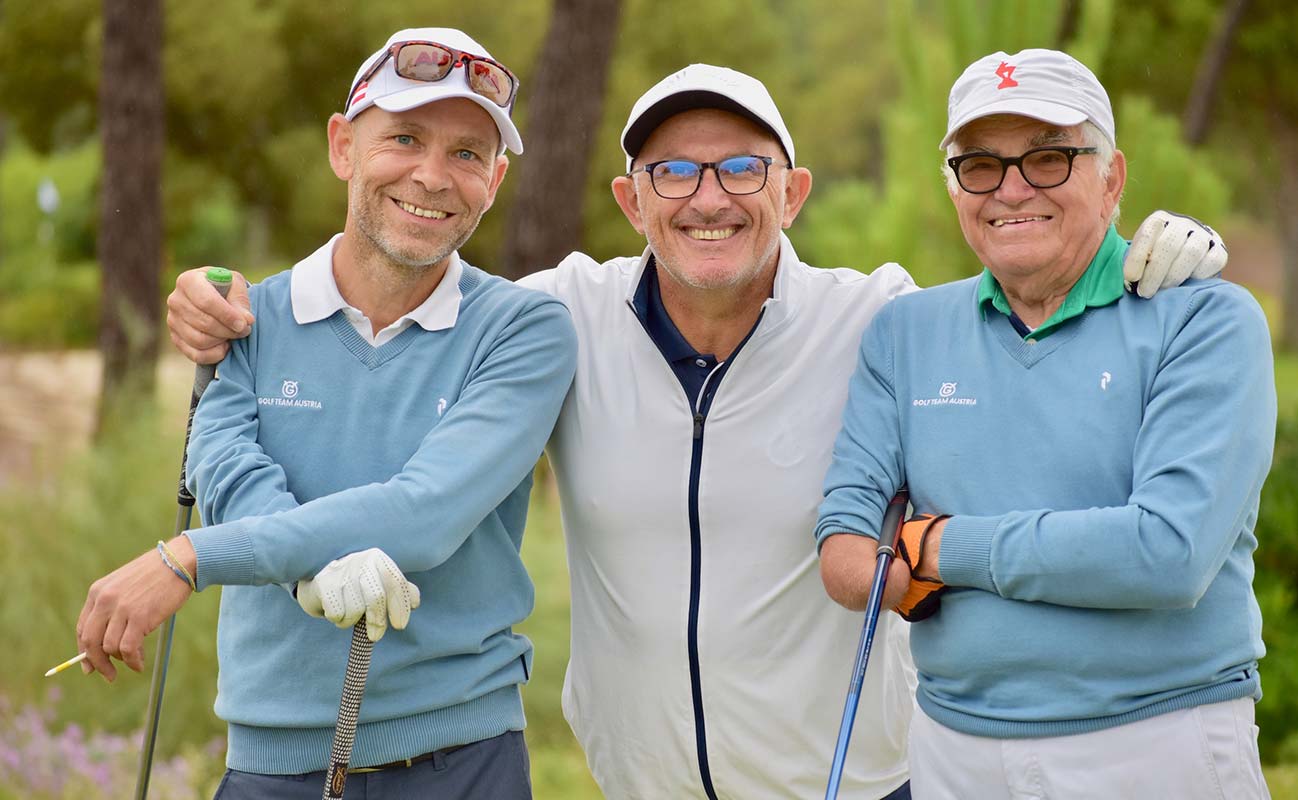
Golf keeps people active, outdoors and among friends, and those are all things linked to a lower risk of dementia. For people already living with dementia, dementia-friendly golf can help them stay connected and enjoy the game.
14
risk factors account for nearly half of dementia risk
Being physically inactive and socially isolated are two of them. Golf helps with both. Source: Livingston et al., 2024
Key findings
What the research has found
01
Active people have a lower risk
People who do regular physical activity have a lower risk of dementia, including Alzheimer’s disease. Source: NHS, 2025
02
Exercise and company both matter
The Lancet Commission advises staying physically and socially active in mid and later life. Source: Livingston et al., 2024
03
Golf is accessible
A Scottish study found golf is accessible for people living with dementia, and that playing keeps them socially connected and improves their wellbeing. Source: Norval et al., 2021
04
Benefits for wellbeing
Older adults with progressive conditions, including dementia, reported benefits to mental and physical wellbeing after a 12-week golf programme. Source: Sheffield Hallam University, 2024
In practice
Golf in Society
Golf in Society is a social enterprise that runs golf sessions for older people, particularly people living with dementia and Parkinson’s, with coaches at golf venues. It is a great supporter of the Golf & Health Project.
An evaluation of its 12-week programme, led by Sheffield Hallam University, reported benefits to participants’ mental and physical wellbeing. Source: Sheffield Hallam University, 2024
The link between staying active and a lower risk of dementia is well established. Source: Livingston et al., 2024
Research on golf itself is small and mostly based on interviews and programme evaluations rather than trials. It shows golf can be enjoyable and good for wellbeing for people living with dementia, not that it slows the condition. Source: Norval et al., 2021
Getting started
Making golf work for people living with dementia
Ideas drawn from dementia-friendly golf programmes. Source: Norval et al., 2021
Find a dementia-friendly session
Look for programmes such as Golf in Society, or ask your local club or PGA Professional.
Keep it social
Playing with family, friends or a regular group is a big part of the benefit.
Go short
A few holes, a short course or the practice ground can be just as rewarding.
Clubs can help
Training staff and volunteers to be dementia-friendly makes a club welcoming for players and carers.
Yes. Research in Scotland found golf is accessible for people living with dementia and helps them stay socially connected. Source: Norval et al., 2021.
Livingston G, Huntley J, Liu KY, et al. Dementia prevention, intervention, and care: 2024 report of the Lancet standing Commission. The Lancet, 2024. Read the source
Norval RS, Henderson F, Whittam G. Playing the long game: exploring the phenomenon of dementia-friendly golf. Dementia, 2021. Read the source
Sheffield Hallam University. Golf improves wellbeing of older adults with progressive health conditions, 2024. Read the source
The Golf & Health Project brings together published research on golf and health. This page is general information, not medical advice. Page last reviewed: November 2026.