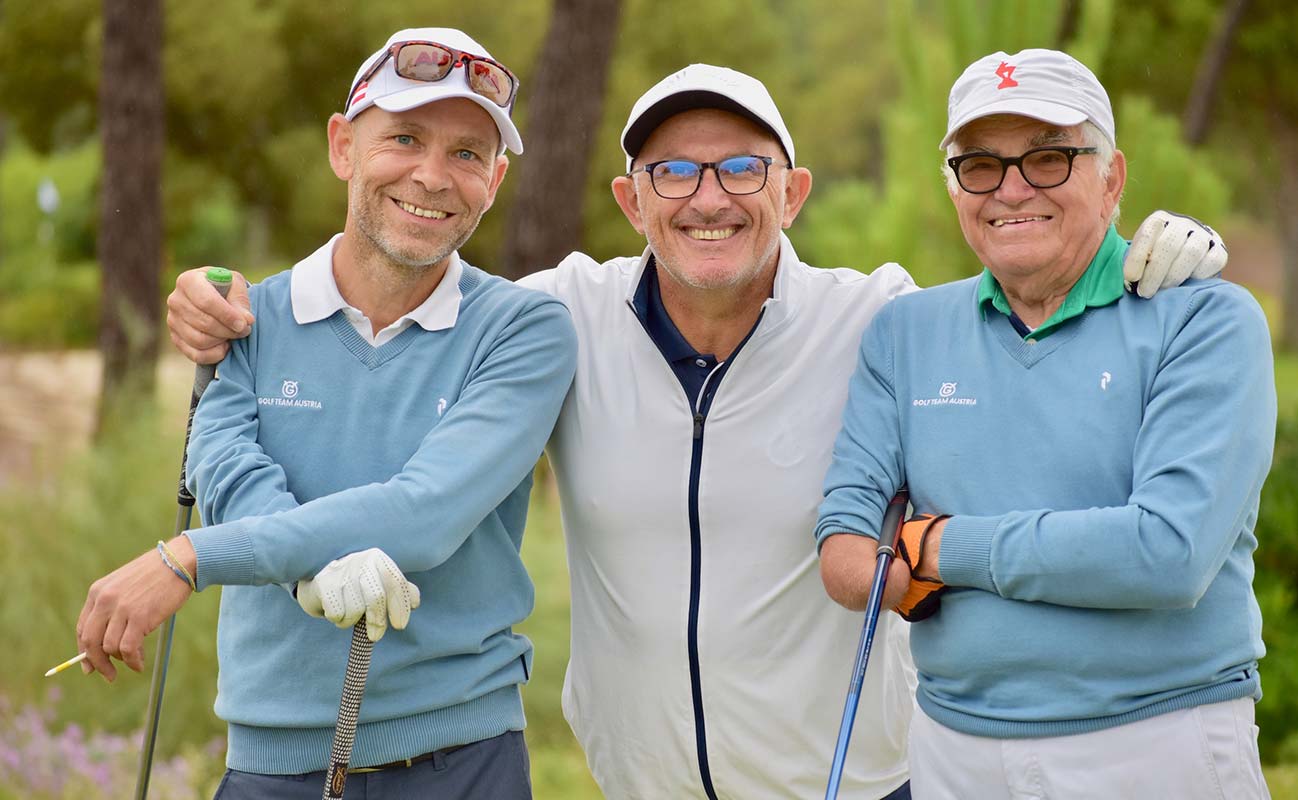
Researchers followed 300,818 members of Swedish golf clubs and compared their death rates with people of the same age, sex and social background. Source: Farahmand et al., 2009
02
The benefit held for everyone
Lower death rates showed up in men and women, in every age group and in every social and income group. Source: Farahmand et al., 2009
03
Better golfers had the lowest death rates
Golfers with the lowest handicaps had the lowest death rates of all, though higher-handicap golfers still did better than non-golfers. Source: Farahmand et al., 2009
04
Older golfers in the US did better too
In a study of nearly 5,900 people aged 65 and over, 15% of those who played golf at least once a month died over ten years, compared with 25% of non-golfers. This was presented at a conference in 2020. Source: American Heart Association, 2020
Why it might work
Why might golf help you live longer?
Being inactive is one of the biggest risks to health. The World Health Organization says up to five million deaths a year could be avoided if people were more active. Golf gets people moving in three ways. Source: World Health Organization, 2020
1
Walking
A round of golf means hours on your feet, walking at a steady pace. That counts as moderate-intensity exercise.
2
Muscle activity
Swinging, carrying a bag or pushing a trolley works your muscles, which helps strength and balance as you get older.
3
Time with others
Golf is a social game. Regular contact with friends is good for mood and wellbeing, which matter for health too.
Golf may add life to your years as well as years to your life: golfers also report better quality of life and wellbeing. Source: Murray et al., 2016
How sure can we be?
Does golf itself make people live longer?
The Swedish researchers compared golfers with people of the same age, sex and social background, so the difference isn’t simply down to who plays golf. They concluded that the exercise golf provides is most likely part of the reason golfers live longer, while noting they couldn’t be certain it explains all of it. Source: Farahmand et al., 2009
That fits the wider evidence. A round of golf is moderate-intensity exercise, and regular moderate exercise is strongly linked to a longer, healthier life. Source: Murray et al., 2016
The safest summary: staying active is what matters most, and golf is an enjoyable way to do it that people can keep up for life.
Get the most from your golf
How to get the most health benefit from golf
Advice from the 2018 International Consensus on Golf and Health. Source: Murray et al., 2018
150 minutes a week
Aim for at least 150 minutes of moderate activity every week. Golf can count towards it.
Walk the course
Walk rather than ride a buggy when you can. It adds to the activity you get.
Warm up
A few minutes of warming up before you tee off helps prevent injury.
Protect your skin
Wear sun cream and a hat. You’ll spend hours outdoors.
Research suggests so. A study of 300,818 Swedish golfers found death rates 40% lower than in non-golfers of the same age, sex and social background. Source: Farahmand et al., 2009.
No. Golfers at every level had lower death rates than non-golfers. The best players (lowest handicaps) did best of all. Source: Farahmand et al., 2009.
Farahmand B, Broman G, de Faire U, Vågerö D, Ahlbom A. Golf: a game of life and death. Reduced mortality in Swedish golf players. Scandinavian Journal of Medicine & Science in Sports, 2009. Read the paper
Cardiovascular Health Study analysis by the University of Missouri, presented at the American Stroke Association’s International Stroke Conference, 2020. Reported by the American Heart Association. Read the report
Murray AD, Daines L, Archibald D, et al. The relationships between golf and health: a scoping review. British Journal of Sports Medicine, 2016. Read the paper
Murray AD, et al. 2018 International consensus statement on golf and health to guide action by people, policymakers and the golf industry. British Journal of Sports Medicine, 2018. Read the paper
World Health Organization. Every move counts towards better health, says WHO. 2020. Read the guidance
The Golf & Health Project brings together published research on golf and health. Page last reviewed: November 2026.